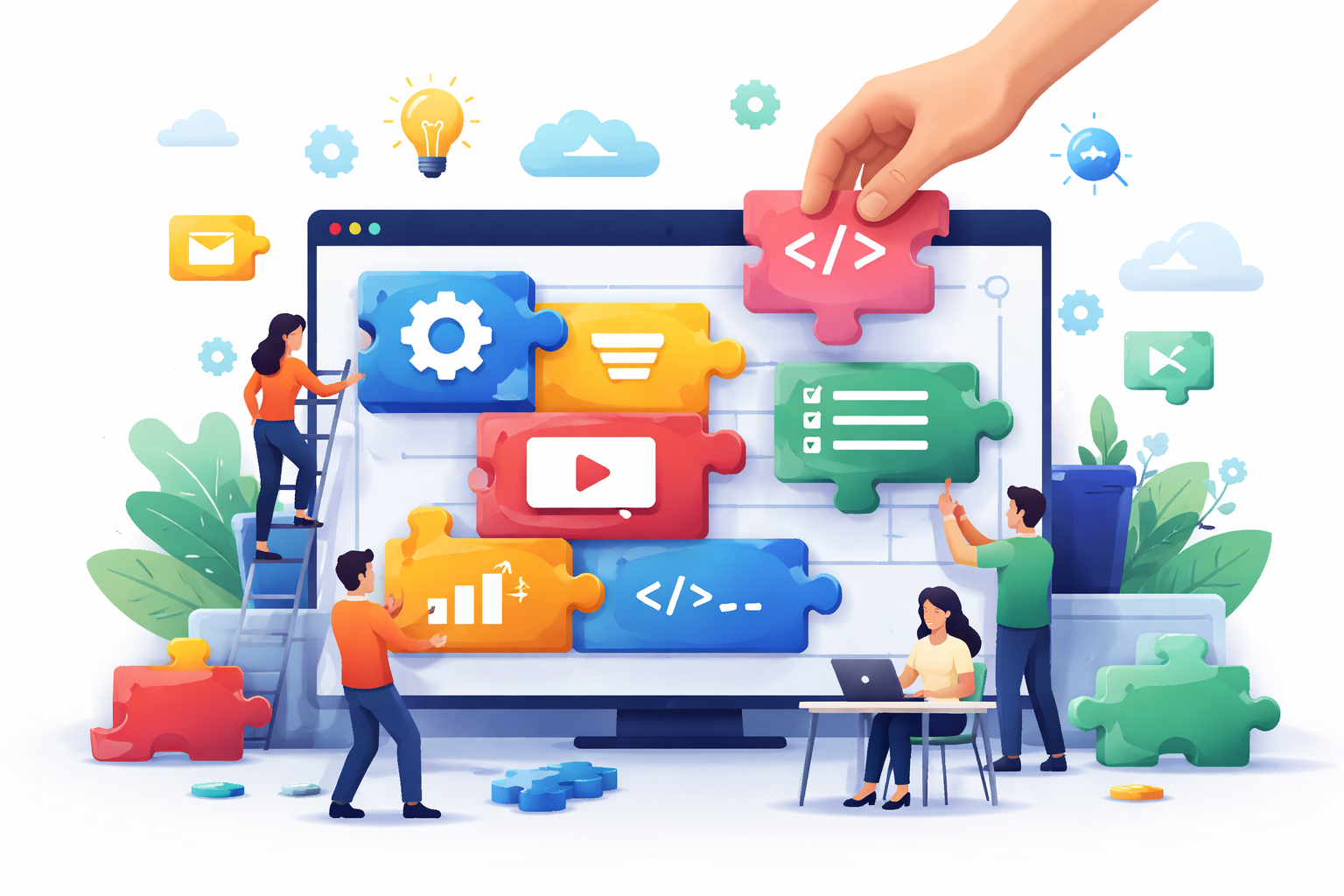
Software development is undergoing a major structural shift. Traditional monolithic systems are being replaced by modular, flexible architectures that allow businesses to innovate faster and scale more efficiently.
Modular software architecture is no longer optional — it’s foundational to modern digital systems.
What Is Modular Software Architecture?
Modular software architecture breaks applications into smaller, independent components that work together through well-defined interfaces.
These modules may include:
Microservices
APIs
Independent UI components
Containerized services
Reusable libraries
Each module handles a specific function and can be developed, deployed, and scaled independently. This approach increases flexibility, maintainability, and long-term adaptability.
Why the Shift Away From Monolithic Systems?
Monolithic applications bundle all functionality into a single codebase. While simple to start, they become difficult to scale and maintain.
Common challenges include:
Slow development cycles
Risky deployments
Limited scalability
System-wide failures
Technology lock-in
As businesses demand faster updates and digital agility, modular design provides a more sustainable path forward.
1. Microservices Drive Independent Innovation
Microservices architecture divides large applications into small, independently deployable services.
Benefits include:
Faster feature releases
Isolated failures
Independent scaling
Better team autonomy
This structure supports agile development and continuous delivery, enabling organizations to move at market speed.
2. Cloud Computing Makes Modularity Practical
Cloud-native platforms like AWS, Azure, and Google Cloud enable containerization, serverless computing, and automated scaling.
With cloud infrastructure, organizations can:
Deploy services independently
Scale only what’s needed
Reduce infrastructure waste
Improve global availability
Cloud and modular architecture naturally complement each other.
3. API-First Ecosystems
We now operate in an API-driven economy. Modular systems rely on APIs to connect internal services and third-party solutions.
This allows organizations to:
Integrate specialized tools
Expand digital partnerships
Build composable platforms
Accelerate development
Instead of building everything from scratch, companies assemble powerful ecosystems through modular components.
4. Scalability and Performance Optimization
Not all system components require equal resources. Modular software enables granular scaling, meaning only high-demand services expand.
This results in:
Lower infrastructure costs
Improved performance
Greater reliability
Efficient resource management
For high-traffic or mission-critical systems, this level of control is essential.
5. Reduced Risk and Greater Resilience
In modular systems, failures are isolated rather than catastrophic.
If one service experiences an issue:
The rest of the system remains operational
Debugging is faster
Rollbacks are easier
Security threats are contained
This resilience is especially critical for enterprise, financial, healthcare, and government systems.
6. Long-Term Flexibility
Technology evolves rapidly. Modular architecture allows organizations to modernize individual components without rebuilding entire systems.
This enables:
Gradual upgrades
Multi-language development
Legacy system integration
Future-proof scalability
Businesses can evolve continuously instead of undergoing disruptive overhauls.
The Strategic Impact of Modularity
Modular software architecture supports:
Faster innovation
Lower operational risk
Scalable growth
Improved cost efficiency
Digital transformation initiatives
Software today is infrastructure. Organizations that embrace modular design gain the adaptability needed to compete in a rapidly evolving market.
Final Thoughts
Software is becoming more modular because business environments demand speed, resilience, and scalability. Microservices, APIs, and cloud-native systems are not trends — they are the new standard.
As digital ecosystems continue expanding, modular software architecture will remain central to building systems designed for continuous evolution.

 All
All AI & ML
 Healthcare
 Education
 Games
Games Fitness
 Business
 Webapps
 Websites
 More
More Case Studies
 Startup
 Web3 Development
 Capabilities
 Game Development
 Website Development
 Prototyping Services
 Mobile App Development
 Government Contracts
 Client Dashboard
 Design Process
 IP Protection
 Project Management
 Working with Finally Free
 FAQ
FAQ How to Videos
 About FFP
 Meet The Team
 Press
Press