
 All
All AI & ML
 Healthcare
 Education
 Games
Games Fitness
 Business
 Webapps
 Websites
 More
More Case Studies
 Startup
 Web3 Development
 Capabilities
 Game Development
 Website Development
 Prototyping Services
 Mobile App Development
 Government Contracts
 Client Dashboard
 Design Process
 IP Protection
 Project Management
 Working with Finally Free
 FAQ
FAQ How to Videos
 About FFP
 Meet The Team
 Press
Press- Our Work
-
-
PORTFOLIO
OTHERS
-
-
- Services
-
- How We Work
-
- Resources
-
- About Us
-
- Contact Us
- Let’s Talk
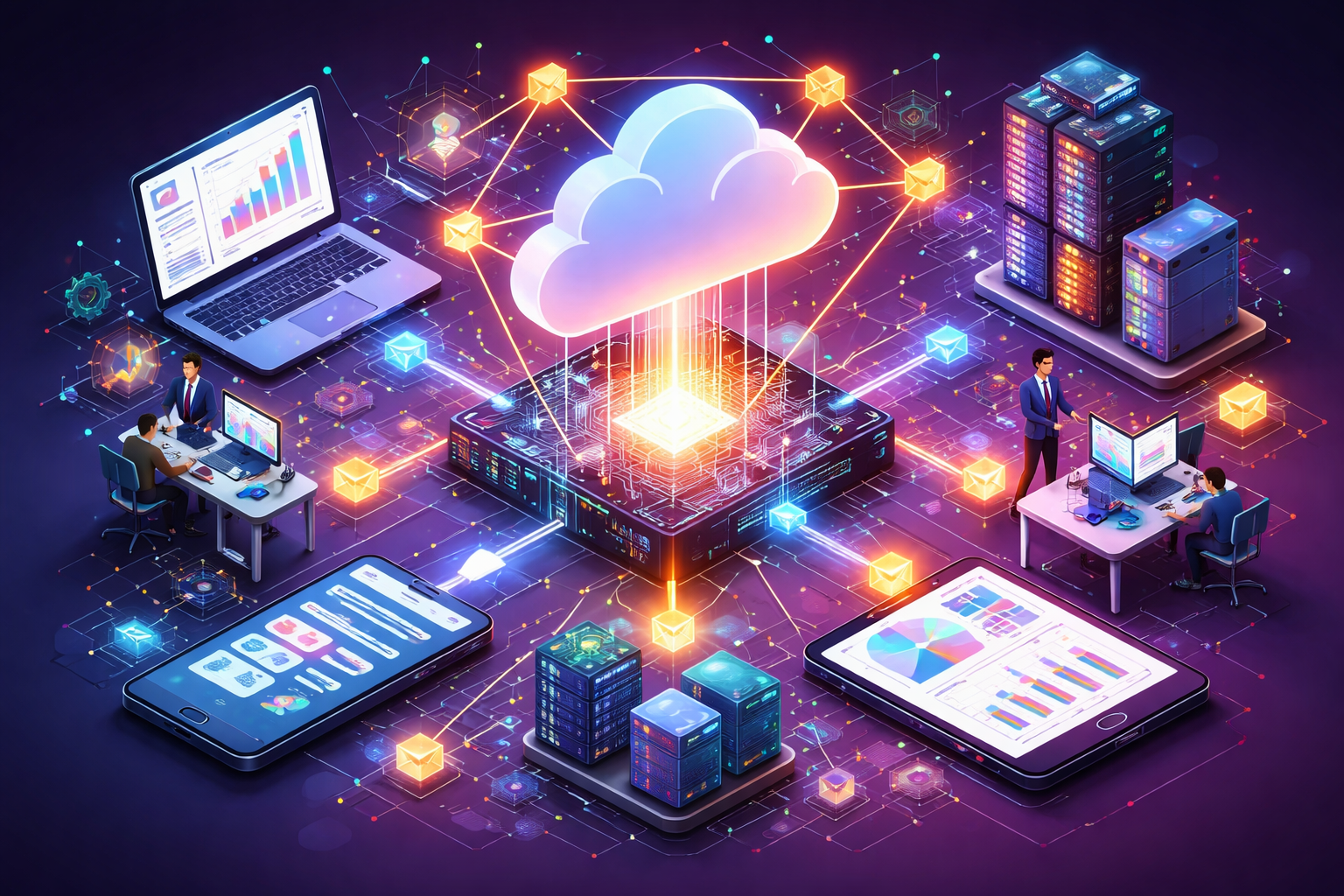
Modern applications are no longer simple, monolithic programs running on a single server. Today’s software ecosystems must support millions of users, real-time interactions, distributed systems, and rapid scalability. To meet these demands, developers are increasingly adopting Event-Driven Architecture (EDA) as the foundation of modern systems.
In fact, many organizations now consider event-driven architecture the default approach for building scalable, cloud-native applications.
But why is this shift happening?
Let’s explore what event-driven architecture is, why it’s gaining momentum, and how it’s transforming modern software development.
What Is Event-Driven Architecture?
Event-Driven Architecture (EDA) is a software design pattern where system components communicate by producing and consuming events.
An event represents a change in state or an action that has occurred within a system.
Examples of events include:
A user placing an order
A payment being processed
A file being uploaded
A sensor detecting motion
A customer updating their profile
Instead of directly calling services or tightly coupling components together, systems publish events to an event broker or streaming platform (such as Kafka, RabbitMQ, or AWS EventBridge). Other services then subscribe and react to those events.
This approach creates loosely coupled, highly scalable systems that can evolve without breaking existing functionality.
Why Event-Driven Architecture Is Becoming the Default
1. Real-Time Data Processing Is Now Essential
Modern applications rely heavily on real-time responsiveness.
Examples include:
Live financial transactions
Instant messaging
Fraud detection
Streaming platforms
IoT monitoring systems
Event-driven systems allow applications to react instantly when something happens, enabling real-time workflows that traditional request-response architectures struggle to handle.
For example:
When a customer places an order:
An order event is published
Inventory service updates stock
Payment service processes the charge
Notification service sends confirmation
Analytics service records the transaction
All of this happens asynchronously and simultaneously.
2. Scalability for Cloud-Native Systems
Modern applications run in distributed cloud environments, where scalability is critical.
Event-driven architecture supports scalability by allowing services to process events independently. This means systems can:
Scale individual services separately
Handle sudden spikes in traffic
Process millions of events per second
Platforms like Apache Kafka, AWS EventBridge, and Google Pub/Sub are built specifically to support this type of high-volume event processing.
3. Loosely Coupled Services
Traditional architectures often involve tight coupling, where one service depends heavily on another. This makes systems fragile and difficult to update.
Event-driven architecture solves this by decoupling services.
Instead of directly calling another service, components simply emit events.
This means:
Services can evolve independently
New services can subscribe to events without changing existing code
Failures are isolated
For example, adding a recommendation engine to an e-commerce system simply requires subscribing to purchase events.
No core system changes are required.
4. Supports Microservices Architecture
Microservices have become the dominant architecture pattern for large-scale systems. However, microservices require efficient communication between services.
Event-driven architecture is a natural fit for microservices because it enables:
asynchronous communication
independent service scaling
resilient distributed workflows
Many large-scale platforms such as Netflix, Uber, and Amazon rely heavily on event-driven systems to coordinate their microservices.
5. Improved System Resilience
Event-driven systems are inherently more fault tolerant.
Because events are typically stored in message queues or streams, services can recover from failures without losing data.
If a service goes down:
events remain in the queue
the service resumes processing when it recovers
This approach significantly improves system reliability compared to synchronous architectures.
6. Enables Complex Automation
Event-driven systems make it easy to build automated workflows.
For example, a SaaS platform might trigger the following events:
User signup → onboarding workflow → welcome email → analytics tracking → CRM update.
Each step is triggered automatically by events.
This architecture allows organizations to build powerful automation pipelines with minimal coupling between systems.
Real-World Use Cases
Event-driven architecture powers many of the digital platforms we rely on every day.
E-Commerce Platforms
Online stores use events for:
order processing
inventory updates
shipping notifications
recommendation engines
Financial Systems
Banks use event-driven systems for:
transaction monitoring
fraud detection
payment processing
compliance tracking
IoT Systems
IoT devices continuously generate events such as:
sensor readings
temperature alerts
device status updates
Event-driven platforms allow organizations to process this data instantly.
Streaming Platforms
Services like Netflix and Spotify rely on event streams to track:
user behavior
playback activity
recommendations
analytics
Technologies Powering Event-Driven Architecture
Several technologies have become essential tools for implementing event-driven systems:
Event Streaming Platforms
Apache Kafka
Amazon Kinesis
Google Pub/Sub
Azure Event Hubs
Message Brokers
RabbitMQ
ActiveMQ
NATS
Event Processing Frameworks
Apache Flink
Apache Spark Streaming
Kafka Streams
These tools allow developers to build high-throughput, real-time data pipelines.
Challenges of Event-Driven Architecture
While powerful, event-driven architecture does introduce complexity.
Common challenges include:
Managing event schemas
Ensuring event ordering
Debugging distributed workflows
Handling duplicate events
To address these issues, teams often implement:
event versioning
schema registries
idempotent processing
observability tools
With the right tooling, these challenges can be effectively managed.
The Future of Event-Driven Systems
As organizations increasingly adopt cloud-native infrastructure, microservices, and real-time applications, event-driven architecture will continue to grow in importance.
Many modern platforms are already event-first by design, meaning they treat events as the core building blocks of the system.
Emerging technologies like:
real-time analytics
AI-driven automation
edge computing
IoT ecosystems
will rely heavily on event streams to process massive amounts of data in real time.
Conclusion
Event-driven architecture is quickly becoming the default architecture pattern for modern software systems.
Its ability to support real-time processing, scalability, resilience, and loosely coupled services makes it ideal for today’s distributed cloud environments.
Organizations that adopt event-driven systems gain the ability to build more flexible, responsive, and future-proof applications.
As software continues to evolve toward real-time, data-driven experiences, event-driven architecture will remain a cornerstone of modern system design.
