
 All
All AI & ML
 Healthcare
 Education
 Games
Games Fitness
 Business
 Webapps
 Websites
 More
More Case Studies
 Startup
 Web3 Development
 Capabilities
 Game Development
 Website Development
 Prototyping Services
 Mobile App Development
 Government Contracts
 Client Dashboard
 Design Process
 IP Protection
 Project Management
 Working with Finally Free
 FAQ
FAQ How to Videos
 About FFP
 Meet The Team
 Press
Press- Our Work
-
-
PORTFOLIO
OTHERS
-
-
- Services
-
- How We Work
-
- Resources
-
- About Us
-
- Contact Us
- Let’s Talk
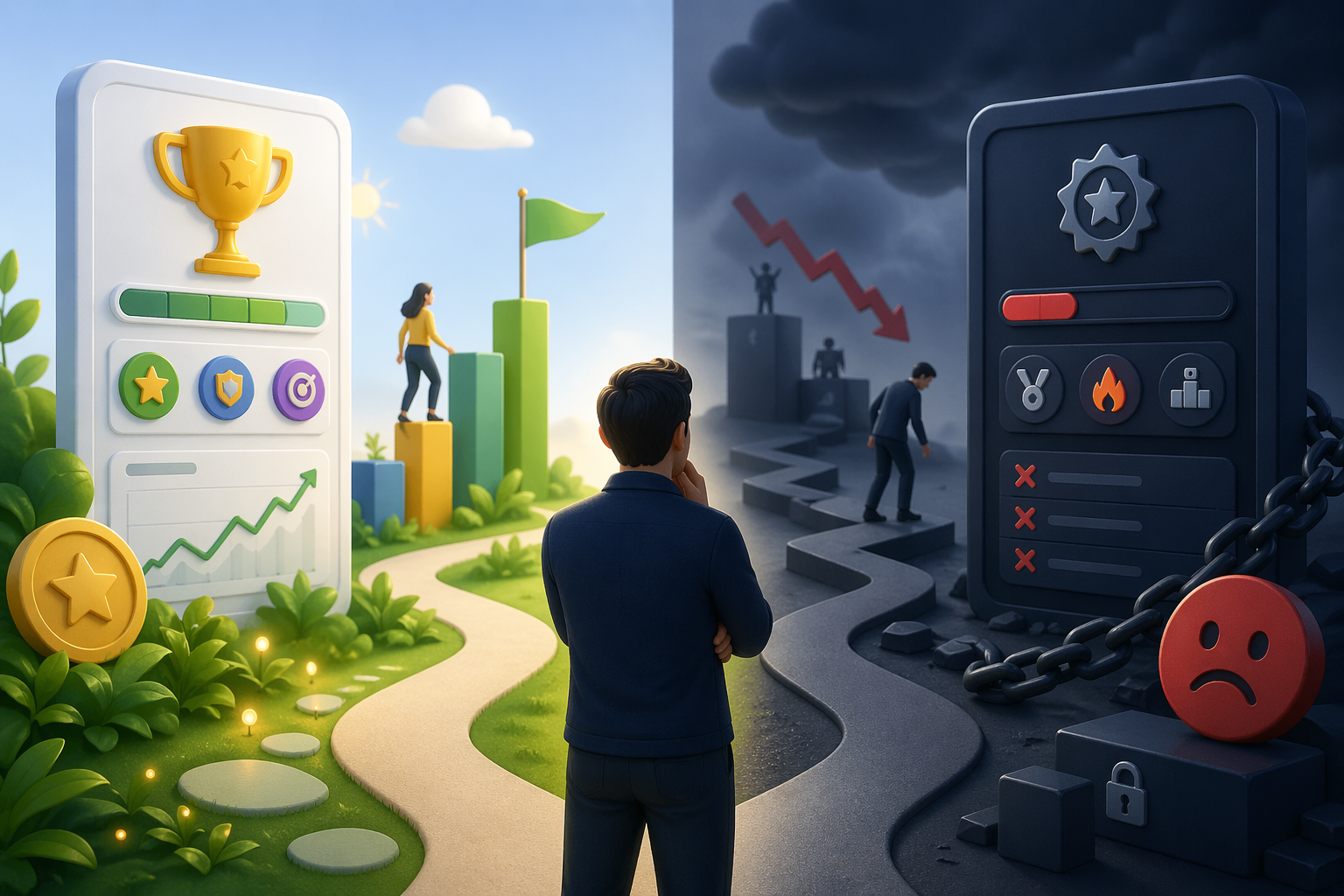
Gamification has become a go-to strategy for businesses aiming to increase engagement, productivity, and user retention within their applications. By integrating game-like elements—such as points, leaderboards, badges, and rewards—companies can transform routine workflows into more interactive and motivating experiences.
But here’s the reality: gamification isn’t a guaranteed win. When executed poorly, it can frustrate users, undermine intrinsic motivation, and even reduce performance.
So when does gamification actually work—and when does it backfire?
Let’s break it down.
What Is Gamification in Business Apps?
Gamification refers to the application of game mechanics in non-game environments, such as enterprise software, SaaS platforms, and internal productivity tools. The goal is simple: influence behavior through engagement.
Common gamification elements include:
- Points and scoring systems
- Badges and achievements
- Leaderboards
- Progress bars
- Challenges and missions
- Rewards and incentives
These tools tap into basic human psychology—competition, achievement, and reward-seeking behavior.
When Gamification Works
1. When It Aligns With Real Business Goals
Gamification is most effective when it reinforces meaningful outcomes—not just superficial engagement.
Example:
A sales CRM that rewards users for closing deals (not just logging activity) drives actual revenue impact.
If the game mechanics align with KPIs, the system becomes a performance accelerator—not just a distraction.
2. When It Enhances, Not Interrupts, Workflow
Gamification should feel like a natural extension of the user experience—not an overlay that disrupts it.
Effective systems:
- Integrate seamlessly into existing workflows
- Provide feedback in real time
- Avoid unnecessary friction
When users barely notice the “game layer,” that’s often a sign it’s working correctly.
3. When It Motivates Intrinsically (Not Just Extrinsically)
Bad gamification relies heavily on external rewards—points, prizes, or badges. Great gamification supports intrinsic motivation, such as mastery, autonomy, and purpose.
Best practice:
Use rewards to reinforce progress—not replace meaning.
4. When It Respects Different User Types
Not every user is motivated by competition. Some prefer collaboration, exploration, or achievement without public comparison.
Strong gamification systems:
- Offer multiple engagement paths
- Avoid forcing competitive structures
- Personalize experiences when possible
5. When It Uses Data Intelligently
Gamification works best when it’s dynamic—not static.
Using behavioral data allows systems to:
- Adjust difficulty levels
- Personalize rewards
- Identify drop-off points
This keeps the experience relevant and engaging over time.
When Gamification Backfires
1. When It Feels Manipulative
Users are quick to recognize when gamification is being used to push behavior without real value.
If users feel “played,” trust erodes—and engagement drops.
2. When It Rewards the Wrong Behavior
Poorly designed systems often incentivize activity over outcomes.
Example:
Rewarding employees for sending emails instead of closing deals leads to inflated activity with no real productivity gains.
This misalignment can actively harm business performance.
3. When It Creates Unhealthy Competition
Leaderboards can motivate—but they can also discourage.
If top performers dominate consistently:
- Lower-performing users disengage
- Team collaboration decreases
- Morale suffers
Balance competition with cooperative or individual progression systems.
4. When It Becomes Noise
Too many notifications, badges, or rewards can overwhelm users.
Instead of motivating, it creates:
- Cognitive fatigue
- Notification blindness
- Reduced perceived value of rewards
Gamification should be meaningful—not constant.
5. When It Ignores Long-Term Engagement
Short-term spikes in engagement don’t equal sustainable success.
Many gamified systems fail because:
- Rewards lose novelty
- Users “game the system”
- Motivation fades once incentives stop
Sustainable gamification evolves over time.
Best Practices for Implementing Gamification
To ensure success, businesses should follow a strategic approach:
Start With Behavior, Not Features
Define what actions you want to encourage before choosing game mechanics.
Design for User Psychology
Understand your users’ motivations:
- Are they competitive or collaborative?
- Do they value recognition or mastery?
Keep It Simple
Overcomplicating gamification reduces its effectiveness.
Focus on clarity and usability.
Measure and Iterate
Track performance metrics such as:
- Engagement rates
- Task completion
- Retention
Then refine accordingly.
Make It Optional When Possible
Not every user wants gamification. Providing opt-in features increases user satisfaction and adoption.
The Bottom Line
Gamification in business apps is powerful—but only when it’s intentional.
Done right, it can:
- Drive engagement
- Improve productivity
- Strengthen user retention
Done poorly, it can:
- Distract users
- Reduce motivation
- Undermine trust
The difference lies in strategy, execution, and alignment with real user needs.
At Finally Free Productions (FFP), we approach gamification as a behavioral design tool—not just a feature set. The goal isn’t to make work feel like a game—it’s to make meaningful work more engaging, efficient, and rewarding.
Call to Action
Looking to integrate gamification into your business application the right way?
Finally Free Productions can help you design systems that drive real results—without the common pitfalls.
Contact us today to build smarter, more engaging digital experiences.
