
 All
All AI & ML
 Healthcare
 Education
 Games
Games Fitness
 Business
 Webapps
 Websites
 More
More Case Studies
 Startup
 Web3 Development
 Capabilities
 Game Development
 Website Development
 Prototyping Services
 Mobile App Development
 Government Contracts
 Client Dashboard
 Design Process
 IP Protection
 Project Management
 Working with Finally Free
 FAQ
FAQ How to Videos
 About FFP
 Meet The Team
 Press
Press- Our Work
-
-
PORTFOLIO
OTHERS
-
-
- Services
-
- How We Work
-
- Resources
-
- About Us
-
- Contact Us
- Let’s Talk
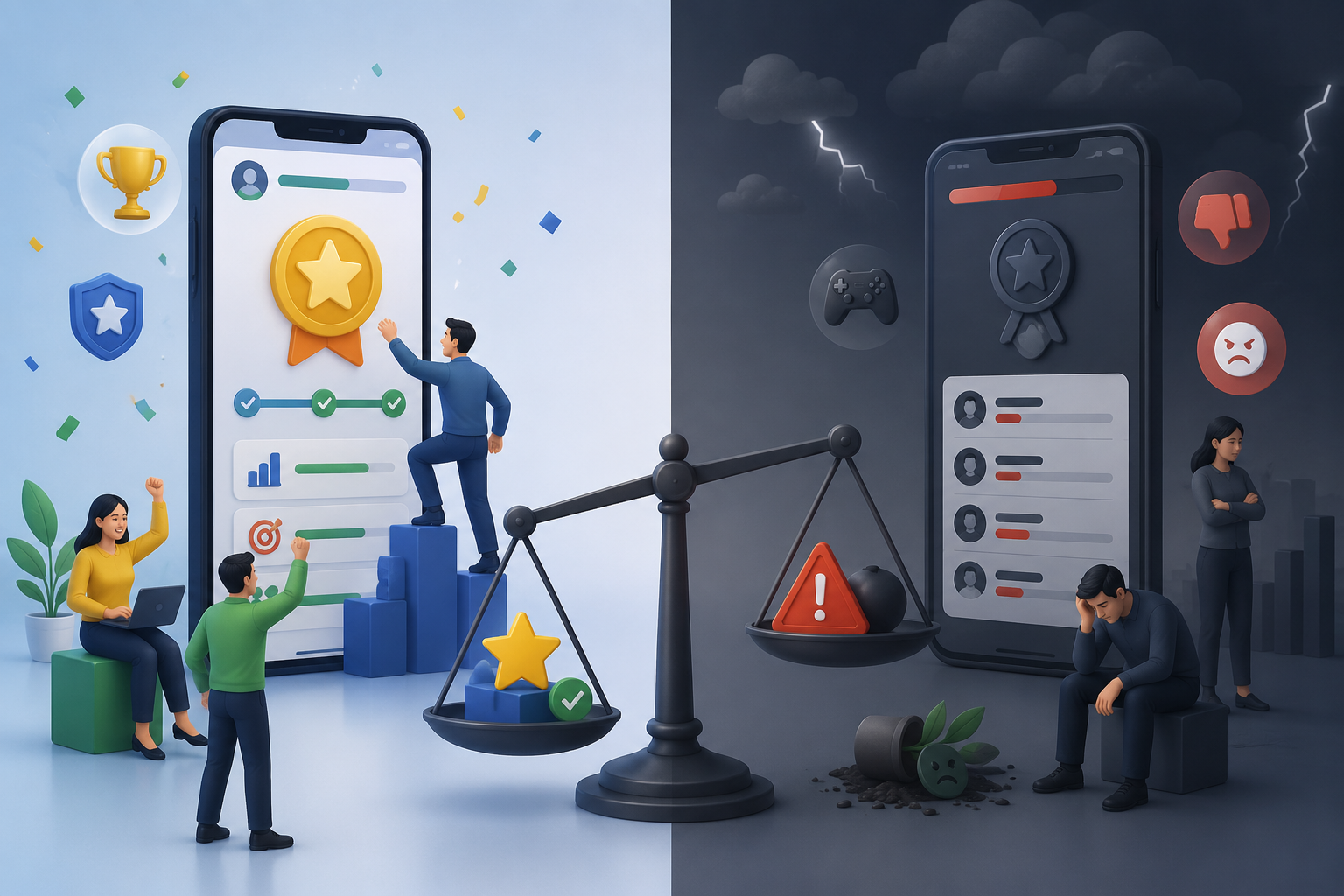
In today’s competitive digital landscape, businesses are constantly searching for ways to improve user engagement, customer retention, and employee productivity. One strategy that continues to gain traction is gamification in business apps.
From fitness apps awarding achievement badges to employee platforms using leaderboards and reward systems, gamification has become a powerful tool for influencing behavior and increasing participation. But while gamification can deliver impressive results, it can also backfire when implemented poorly.
Understanding when gamification works—and when it doesn’t—is essential for companies building modern business applications.
What Is Gamification in Business Apps?
Gamification is the process of incorporating game-like elements into non-game environments such as business software, mobile applications, customer portals, and workplace systems.
Common gamification features include:
- Points and scoring systems
- Achievement badges
- Progress bars
- Leaderboards
- Rewards and incentives
- Challenges and competitions
- Daily streaks
- Unlockable content
- Performance milestones
The goal is simple: encourage users to engage more consistently with an app or platform.
Businesses use gamification to:
- Increase customer loyalty
- Improve employee performance
- Boost training participation
- Encourage healthy habits
- Drive app adoption
- Enhance user experience
When designed strategically, gamification can transform routine interactions into highly engaging experiences.
Why Gamification Works
1. It Taps Into Human Psychology
Gamification succeeds because it leverages natural human motivations such as:
- Achievement
- Competition
- Recognition
- Progress
- Rewards
- Social validation
People enjoy seeing measurable progress. Even something as simple as a progress bar can significantly increase completion rates in onboarding flows and training programs.
Example:
LinkedIn uses profile completion percentages to encourage users to add more information to their accounts.
2. It Improves User Engagement
Business apps often struggle with user retention. Gamification introduces interactive elements that make repetitive tasks feel more rewarding.
Examples of increased engagement:
- Sales teams competing on leaderboards
- Employees earning badges for completed training
- Customers collecting loyalty points
- Productivity apps rewarding streak consistency
Apps that successfully gamify user experiences often see:
- Higher session durations
- Increased return visits
- Better feature adoption
- Lower churn rates
3. It Encourages Habit Formation
One of the strongest benefits of gamification is its ability to reinforce habits.
Apps like Duolingo and Fitbit use:
- Daily streaks
- Reminders
- Challenges
- Achievement systems
These features create a psychological loop that encourages users to return consistently.
For business applications, this can translate into:
- More frequent employee logins
- Better CRM usage
- Improved compliance training completion
- Increased customer interaction
4. It Creates Measurable Motivation
Gamification makes progress visible.
Employees and customers can clearly see:
- Their performance
- Their rankings
- Their goals
- Their achievements
This visibility creates motivation and accountability while also providing businesses with measurable engagement data.
When Gamification Backfires
Despite its benefits, gamification is not always effective. In some cases, it can actually reduce engagement and frustrate users.
1. When It Feels Forced
One of the biggest mistakes businesses make is adding gamification simply because it’s trendy.
If rewards, badges, or points feel disconnected from real value, users quickly lose interest.
Poor Example:
A finance app awarding meaningless badges for basic actions without providing actual benefits.
Users recognize superficial engagement tactics almost immediately.
2. Overemphasis on Competition
Leaderboards can motivate some users—but discourage others.
In workplace applications, excessive competition may:
- Increase stress
- Hurt collaboration
- Lower morale
- Create unhealthy work environments
Employees consistently ranking near the bottom may disengage entirely.
Best Practice:
Use team-based achievements and personal progress tracking alongside competitive elements.
3. Reward Fatigue
Not all rewards maintain long-term effectiveness.
If users receive constant notifications, badges, or achievements, the system can become repetitive and lose impact.
This phenomenon is known as “reward fatigue.”
Over-gamified experiences often feel:
- Distracting
- Artificial
- Manipulative
- Annoying
The result is lower engagement instead of higher participation.
4. Prioritizing Metrics Over Experience
Some companies focus too heavily on increasing app usage metrics without improving the actual user experience.
Gamification should support meaningful interactions—not distract from them.
If users feel manipulated into spending unnecessary time in an app, trust can decline rapidly.
Warning Signs:
- Excessive push notifications
- Addictive engagement loops
- Misleading reward systems
- Overly aggressive retention tactics
Long-term customer loyalty depends on trust and value—not just engagement statistics.
Industries Successfully Using Gamification
Employee Training Platforms
Businesses use gamified learning systems to increase participation and knowledge retention.
Benefits:
- Higher completion rates
- Improved learning engagement
- Better performance tracking
CRM and Sales Software
Sales teams often respond well to:
- Performance leaderboards
- Monthly challenges
- Achievement milestones
Gamification can increase motivation and encourage healthy competition when balanced correctly.
Health and Wellness Apps
Fitness tracking apps remain one of the most successful examples of gamification.
Features like:
- Daily goals
- Streaks
- Rewards
- Challenges
help users stay committed to long-term habits.
Customer Loyalty Programs
Retail and eCommerce brands use points systems and rewards programs to improve customer retention and repeat purchases.
Best Practices for Gamification in Business Apps
Focus on User Value First
Gamification should enhance the user experience—not replace it.
Ask:
- Does this feature help users achieve their goals?
- Does it provide meaningful motivation?
- Is it aligned with business objectives?
Keep It Simple
Overly complicated reward systems confuse users.
The best gamification experiences are:
- Easy to understand
- Intuitive
- Transparent
- Rewarding without being overwhelming
Offer Meaningful Rewards
Rewards should feel valuable.
Examples include:
- Real incentives
- Recognition
- Exclusive features
- Career advancement opportunities
- Discounts or loyalty benefits
Balance Competition with Collaboration
Not every user is motivated by competition.
Strong gamification systems often combine:
- Individual progress tracking
- Team achievements
- Personal milestones
- Collaborative challenges
Continuously Analyze Results
Gamification should evolve based on user behavior and analytics.
Monitor:
- Engagement metrics
- Retention rates
- User feedback
- Feature adoption
- Completion rates
Then adjust the system accordingly.
The Future of Gamification in Business Applications
As AI, personalization, and behavioral analytics continue to advance, gamification will become even more sophisticated.
Future business apps may include:
- AI-driven personalized rewards
- Adaptive learning systems
- Behavioral prediction models
- Dynamic achievement systems
- Real-time engagement optimization
However, the companies that succeed will be those that use gamification responsibly and strategically.
The goal should never be manipulation—it should be meaningful engagement.
Final Thoughts
Gamification in business apps can be incredibly effective when it aligns with genuine user needs and business objectives. It can improve engagement, strengthen loyalty, encourage productivity, and create more enjoyable digital experiences.
But poor implementation can quickly turn users away.
The difference between successful gamification and failed gamification often comes down to one thing:
Does the experience create real value for the user?
Businesses that prioritize thoughtful design, meaningful incentives, and user trust will see the greatest long-term results from gamified applications.
