The Shift From Platforms to Ecosystems in Tech: Why It’s Reshaping the Future of Innovation
For over a decade, platforms have dominated the tech landscape. Companies like Facebook, Amazon, Apple, and Google built empires by creating centralized hubs where users, developers, and businesses could interact. But today, a new paradigm is taking over—ecosystems.
This shift isn’t just semantic. It represents a fundamental change in how technology is built, scaled, and monetized. For organizations like Finally Free Productions (FFP), understanding this transition is critical to staying competitive and future-ready.
What Is a Platform vs. an Ecosystem?
A platform is a centralized digital environment that connects users and services. Think of it as a hub: controlled, structured, and owned by a single entity.
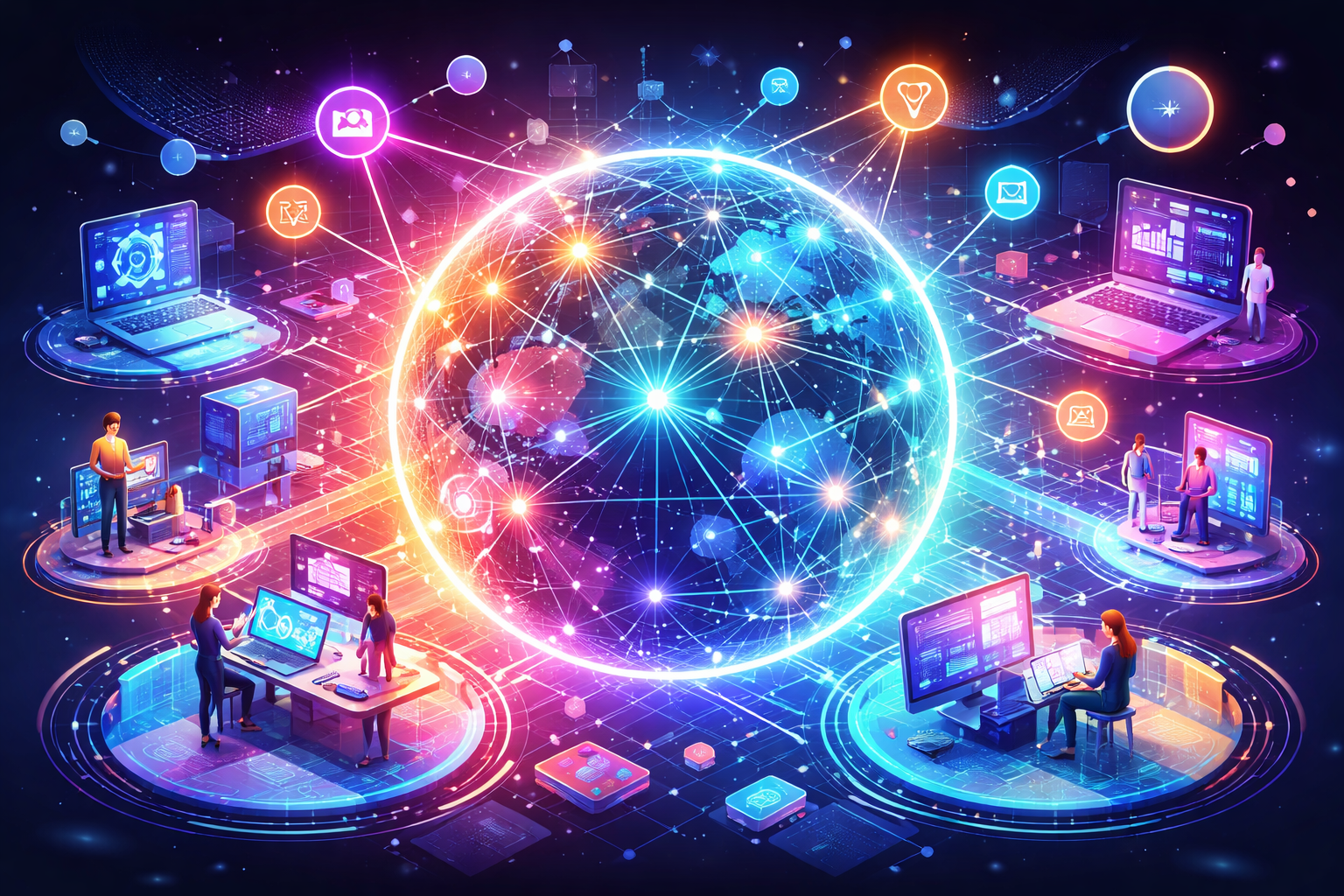
An ecosystem, on the other hand, is decentralized and interconnected. It’s a network of products, services, developers, partners, and users that evolve together.
Key Difference:
Platforms = Control
Ecosystems = Collaboration + Expansion
Why Platforms Are No Longer Enough
Platforms succeeded because they created efficiency and scale. But they also introduced limitations:
Walled gardens restrict innovation
Single-point control slows adaptability
Limited extensibility for external contributors
User dependency on one provider
As markets matured, these constraints became friction points.
Modern users—and businesses—demand flexibility, integration, and personalization at scale.
The Rise of Tech Ecosystems
Ecosystems remove those constraints by enabling interoperability and shared value creation.
Instead of building everything internally, companies now:
Open APIs
Encourage third-party integrations
Enable modular product development
Foster partner networks
This approach accelerates innovation far beyond what any single company can achieve alone.

 All
All AI & ML
 Healthcare
 Education
 Games
Games Fitness
 Business
 Webapps
 Websites
 More
More Case Studies
 Startup
 Web3 Development
 Capabilities
 Game Development
 Website Development
 Prototyping Services
 Mobile App Development
 Government Contracts
 Client Dashboard
 Design Process
 IP Protection
 Project Management
 Working with Finally Free
 FAQ
FAQ How to Videos
 About FFP
 Meet The Team
 Press
Press