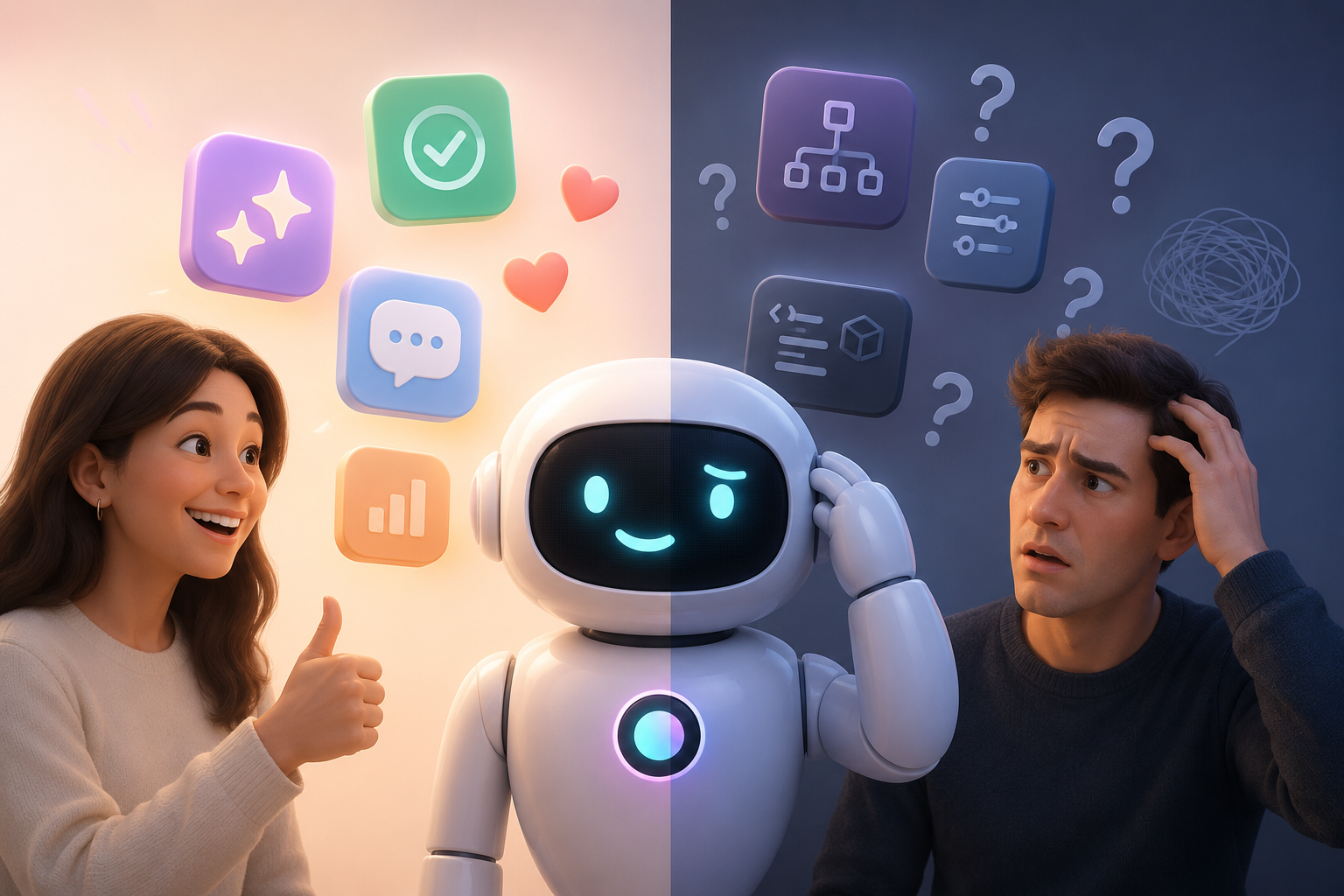
AI Features Users Love vs. AI Features That Confuse Them
Artificial intelligence is becoming a standard part of digital products, from AI assistants and recommendation engines to automated workflows and content-generation tools. But simply adding AI to a product does not guarantee a better user experience.
The most successful AI features users love tend to share a few qualities: they are useful, intuitive, transparent, and easy to control. On the other hand, AI features can quickly become frustrating when users do not understand what the technology is doing—or why.
Understanding the difference is essential for businesses building AI-powered websites, applications, and digital platforms.
AI Features Users Love
1. Smart Personalization
Users appreciate AI when it makes their experience more relevant. Personalized recommendations, customized dashboards, and intelligent search results can reduce the time users spend looking for what they need.
The key is balance. Personalization should feel helpful rather than intrusive. Users should understand why they are seeing certain recommendations and have control over their preferences.
2. AI That Saves Time
One of AI’s greatest strengths is its ability to reduce repetitive work. Features such as automated data entry, document summarization, intelligent scheduling, and workflow automation can deliver immediate value.
When AI eliminates unnecessary steps without creating additional complexity, users can clearly see its benefit.
3. Conversational AI Assistants
AI assistants can improve the user experience by allowing people to ask questions naturally instead of navigating complicated menus or searching through large amounts of information.
The best AI assistants clearly communicate what they can and cannot do. They also provide an easy path to human support when the AI cannot resolve an issue.
4. Helpful Suggestions With User Control
AI works well when it acts as a collaborator rather than taking complete control. Writing suggestions, design recommendations, predictive text, and automated insights can help users make decisions faster.
Users are generally more comfortable when they can review, edit, accept, or reject an AI-generated recommendation before it becomes final.
AI Features That Confuse Users
1. Unexplained AI Decisions
Confusion often begins when AI makes a decision without explaining why.
If a system changes a recommendation, rejects an action, or automatically modifies information, users may question whether the technology is reliable. Providing clear explanations can make AI systems feel more predictable and trustworthy.
2. Too Much Automation
Automation can improve efficiency, but excessive automation can make users feel like they have lost control.
Critical actions should not happen unexpectedly. Products should give users appropriate confirmation options, settings, and ways to undo AI-driven actions whenever possible.
3. AI Features With Unclear Purpose
Adding an “AI-powered” button does not automatically create value. If users cannot immediately understand what an AI feature does or when they should use it, the feature may create more friction than benefit.
Good AI product design focuses on solving a specific user problem—not simply showcasing the technology.
4. Inconsistent or Overconfident Answers
Generative AI can occasionally produce incorrect or misleading information. Problems become more serious when an AI system presents uncertain information as fact.
AI experiences should communicate uncertainty when appropriate and make it easy for users to verify important information.
How to Build Better AI User Experiences
Businesses developing AI-powered products should start with user needs rather than AI capabilities. Before implementing a new feature, teams should ask a simple question: Does this make the user’s task easier, faster, or more effective?
Successful AI experiences typically combine intelligent automation with thoughtful UX design. Clear interfaces, transparent explanations, meaningful user controls, and continuous testing can help ensure that AI supports users instead of confusing them.
At Finally Free Productions (FFP), we understand that effective digital products require more than powerful technology. They require a clear understanding of how people interact with that technology.
As AI continues to evolve, the companies that create the strongest experiences will not necessarily be those that add the most AI features. They will be the ones that use AI strategically—creating products that feel intuitive, useful, and designed around real human needs.
The future of AI user experience is not about making every interaction automated. It is about using artificial intelligence in the right places to help users accomplish more with less friction.

 All
All AI & ML
 Healthcare
 Education
 Games
Games Fitness
 Business
 Webapps
 Websites
 More
More Case Studies
 Startup
 Web3 Development
 Capabilities
 Game Development
 Website Development
 Prototyping Services
 Mobile App Development
 Government Contracts
 Client Dashboard
 Design Process
 IP Protection
 Project Management
 Working with Finally Free
 FAQ
FAQ How to Videos
 About FFP
 Meet The Team
 Press
Press