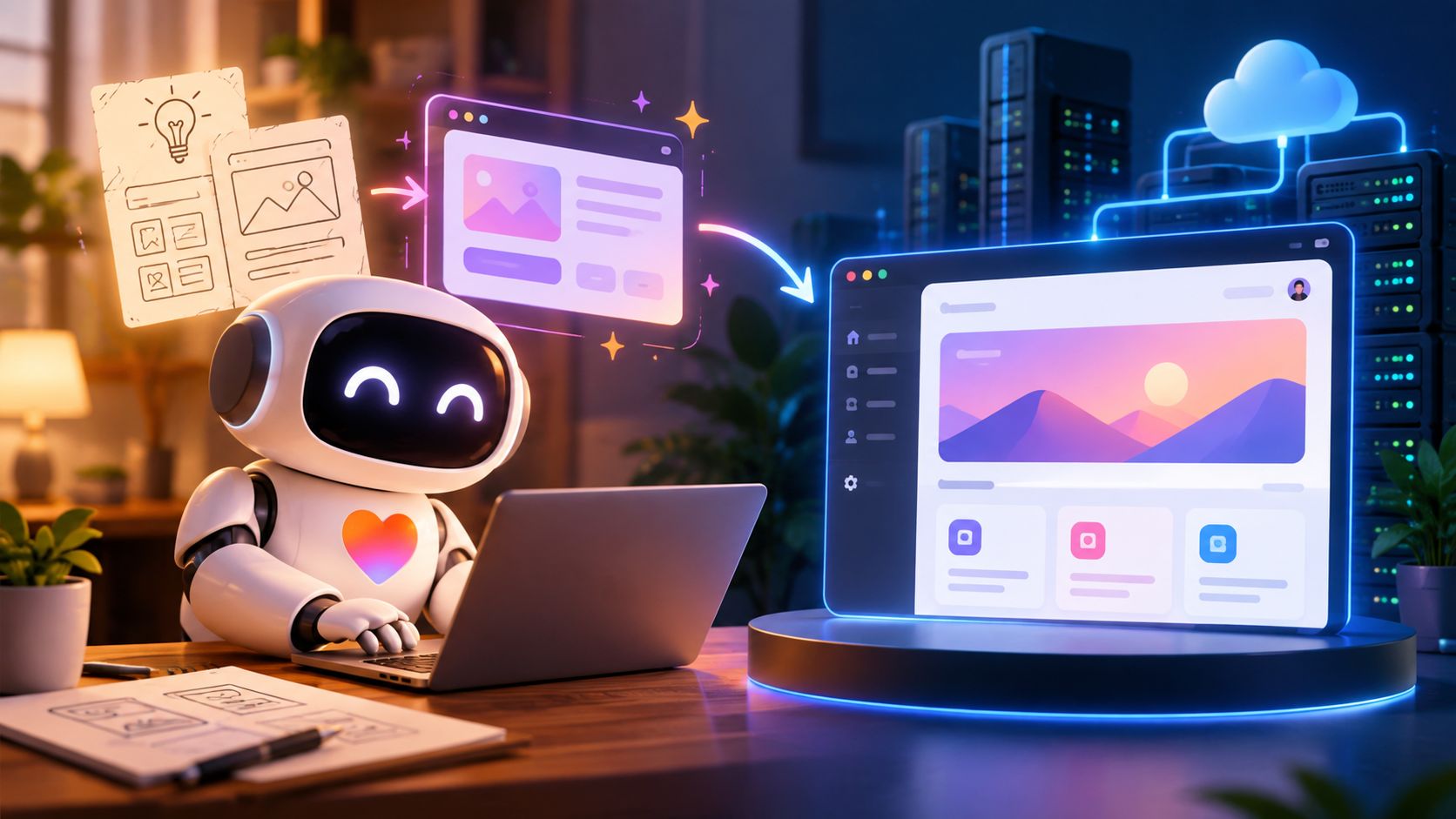
AI-powered development platforms like Lovable are changing how quickly teams can turn an idea into a working application. Instead of building every interface and feature manually, developers and entrepreneurs can use natural-language prompts to generate significant portions of an application.
That speed raises an important question: Can Lovable build a production-ready app?
The short answer is yes—but getting from an AI-generated application to dependable production software can require additional engineering.
What Is Lovable?
Lovable is an AI-powered development platform designed to help users create web applications through natural-language instructions.
It can dramatically accelerate the early stages of development. Teams can use Lovable to create interfaces, implement application functionality, connect services, and rapidly iterate on product ideas.
This makes it particularly attractive for MVP development, prototypes, internal tools, SaaS concepts, and early-stage products.
But generating a functional application and engineering production-grade software aren’t necessarily the same thing.
Can Lovable Apps Be Used in Production?
Yes. Applications created with Lovable can become real, deployed products.
However, whether a specific Lovable application is truly production-ready depends on more than whether it works during a demo.
Before launching a business-critical application, teams should evaluate areas such as:
Security and authentication
Database architecture and permissions
Error handling and application reliability
Performance and scalability
API security and third-party integrations
Responsive design and browser compatibility
Testing and quality assurance
Monitoring, backups, and recovery
Code maintainability
Deployment and infrastructure configuration
AI can accelerate implementation, but these engineering considerations still matter.
Where Lovable Excels
One of Lovable’s biggest advantages is development speed.
A traditional development workflow may require substantial time before stakeholders can interact with a usable product. AI-assisted development can shorten that feedback loop considerably.
Instead of spending the earliest stages of a project translating designs and requirements into boilerplate code, teams can spend more time testing ideas, refining workflows, and validating what customers actually need.
That makes Lovable especially valuable when the priority is moving quickly from concept to functional application.
Where Production Engineering Becomes Important
Problems can emerge when teams assume that because an application looks complete, everything underneath it is ready for production.
A polished interface doesn’t automatically mean the application has secure authorization rules, efficient database queries, comprehensive error handling, scalable architecture, or adequate automated testing.
This distinction becomes increasingly important as an application gains users or handles sensitive and business-critical data.
For a simple MVP, the initial implementation may be sufficient. For a growing SaaS platform, customer portal, enterprise application, or complex marketplace, additional engineering review is often worthwhile.
Lovable vs. Traditional Development Doesn’t Have to Be Either/Or
Businesses don’t necessarily need to choose between AI development and professional software engineering.
A more effective approach can combine both.
Lovable can accelerate prototyping, UI development, iteration, and feature creation. Experienced engineers can then strengthen the areas where production applications require deeper attention, including architecture, security, testing, performance, integrations, and deployment.
The result can be a faster development process without treating production readiness as an afterthought.
Should You Build Your Next App With Lovable?
Lovable can be a strong option when you need to validate an idea quickly, build an MVP, create an internal application, or reduce the amount of repetitive development required to launch a product.
The more important question isn’t simply, “Can Lovable build this?”
It’s:
“What does this application need to reliably support once real users depend on it?”
If the application will process sensitive information, support large numbers of users, integrate with critical business systems, or become a core revenue-generating product, production engineering should be part of the plan from the beginning.
Turning a Lovable Project Into a Production-Ready Product
At Finally Free Productions (FFP), we believe AI development tools are most powerful when they’re paired with sound engineering practices.
Whether you’re starting a new AI-assisted application or already have a Lovable project that needs to be prepared for launch, the next step is understanding what’s happening beyond the interface.
A production-readiness audit can identify security risks, architectural weaknesses, performance concerns, integration issues, and technical debt before they become expensive problems.
Building quickly is valuable. Building something people can reliably depend on is what turns an experiment into a product.
If you’re developing an application with Lovable and want to determine whether it’s ready for real-world use, contact Finally Free Productions to discuss your project and production-readiness requirements.

 All
All AI & ML
 Healthcare
 Education
 Games
Games Fitness
 Business
 Webapps
 Websites
 More
More Case Studies
 Startup
 Web3 Development
 Capabilities
 Game Development
 Website Development
 Prototyping Services
 Mobile App Development
 Government Contracts
 Client Dashboard
 Design Process
 IP Protection
 Project Management
 Working with Finally Free
 FAQ
FAQ How to Videos
 About FFP
 Meet The Team
 Press
Press