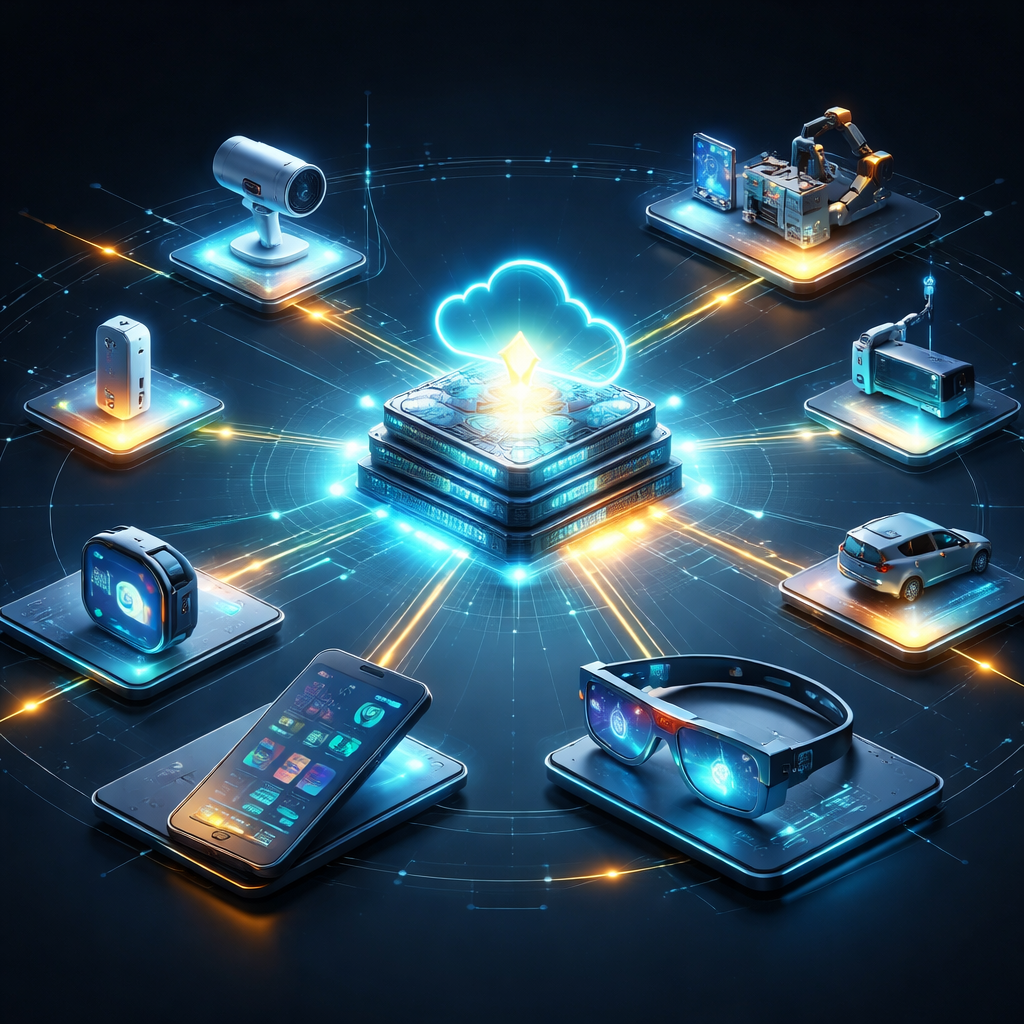
What Edge Computing Means for Consumer and Enterprise Applications
As digital experiences demand faster speeds and smarter functionality, traditional cloud computing is beginning to show its limitations. Enter edge computing—a transformative approach that is redefining how applications are built, deployed, and experienced across both consumer and enterprise environments.
From real-time mobile apps to mission-critical enterprise systems, edge computing is rapidly becoming a cornerstone of modern software architecture.
What Is Edge Computing?
Edge computing refers to processing data closer to where it is generated—at or near the “edge” of the network—rather than relying solely on centralized cloud servers.
Instead of sending all data to a distant data center, edge computing enables devices, local servers, or nearby infrastructure to handle processing tasks. This reduces latency, improves responsiveness, and enhances performance for applications that require real-time decision-making.
Why Edge Computing Matters for Applications
Modern applications are no longer simple tools—they are intelligent, data-driven systems that require:
Instant responsiveness
Continuous uptime
Real-time analytics
Scalable infrastructure
Traditional cloud models struggle to meet these demands alone. Edge computing bridges that gap by distributing processing power closer to the user.
Key Benefits of Edge Computing for Apps
1. Ultra-Low Latency
Applications like gaming, AR/VR, and autonomous systems require near-instant response times. Edge computing minimizes delays by processing data locally.
2. Improved Performance
By reducing the distance data must travel, apps run faster and more efficiently, enhancing user experience.
3. Reduced Bandwidth Costs
Processing data at the edge decreases the volume of data sent to centralized servers, lowering bandwidth usage and costs.
4. Enhanced Reliability
Edge-enabled apps can continue functioning even when connectivity to the cloud is limited or disrupted.
5. Better Data Privacy and Security
Sensitive data can be processed locally instead of being transmitted across networks, reducing exposure risks.
Edge Computing in Consumer Applications
Edge computing is already transforming everyday digital experiences:
Smart Devices and IoT
Smart home systems, wearables, and connected devices rely on edge computing to process data instantly without constant cloud dependency.
Streaming and Gaming
Edge infrastructure enables smoother streaming and low-latency cloud gaming experiences.
Mobile Applications
Apps benefit from faster load times, real-time updates, and improved personalization through localized data processing.
Edge Computing in Enterprise Applications
For enterprises, edge computing is not just an enhancement—it’s a competitive advantage.
Manufacturing and Industry 4.0
Edge systems enable real-time monitoring and predictive maintenance on factory floors.
Healthcare
Medical devices and systems can process critical data instantly, improving patient outcomes.
Retail
Retailers use edge computing for real-time inventory tracking, personalized customer experiences, and automated checkout systems.
Smart Cities
Traffic systems, energy grids, and public services rely on edge computing for efficient, real-time operations.
Edge Computing vs Cloud Computing
Rather than replacing the cloud, edge computing complements it.
Cloud computing handles large-scale data storage and deep analytics
Edge computing handles real-time processing and immediate decision-making
Together, they form a hybrid model that maximizes efficiency and performance.
Challenges to Consider
While edge computing offers significant advantages, it also introduces new complexities:
Infrastructure management across distributed environments
Security across multiple endpoints
Integration with existing cloud systems
Higher initial deployment costs
Organizations must carefully plan their edge strategies to fully realize its benefits.
The Future of Edge Computing
With the rise of 5G networks, AI-driven applications, and IoT ecosystems, edge computing is poised for massive growth.
Future applications will become:
More autonomous
More responsive
More context-aware
For both startups and enterprises, adopting edge computing is no longer optional—it’s a strategic necessity.
Final Thoughts
Edge computing is reshaping how applications are designed and delivered. By bringing processing power closer to the user, it unlocks faster performance, greater reliability, and new possibilities for innovation.
For organizations like Finally Free Productions, understanding and leveraging edge computing can open doors to building smarter, more scalable digital solutions that meet the evolving demands of today’s users.

 All
All AI & ML
 Healthcare
 Education
 Games
Games Fitness
 Business
 Webapps
 Websites
 More
More Case Studies
 Startup
 Web3 Development
 Capabilities
 Game Development
 Website Development
 Prototyping Services
 Mobile App Development
 Government Contracts
 Client Dashboard
 Design Process
 IP Protection
 Project Management
 Working with Finally Free
 FAQ
FAQ How to Videos
 About FFP
 Meet The Team
 Press
Press